Free ADHD planner printable: daily, weekly and brain dump pages
Last updated
Get the free PDF (US Letter + A4)
US Letter and A4. We email both files. The printable stays free.
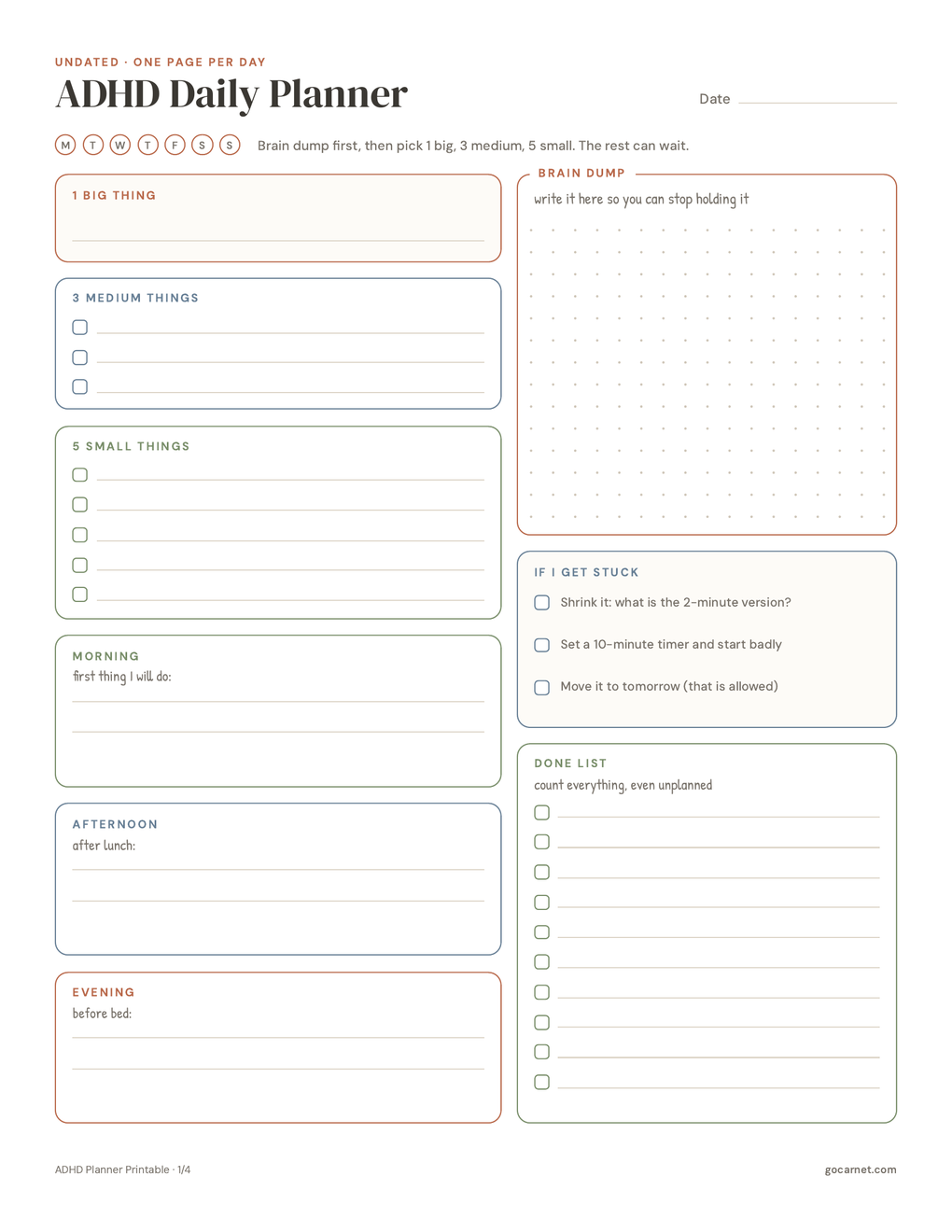
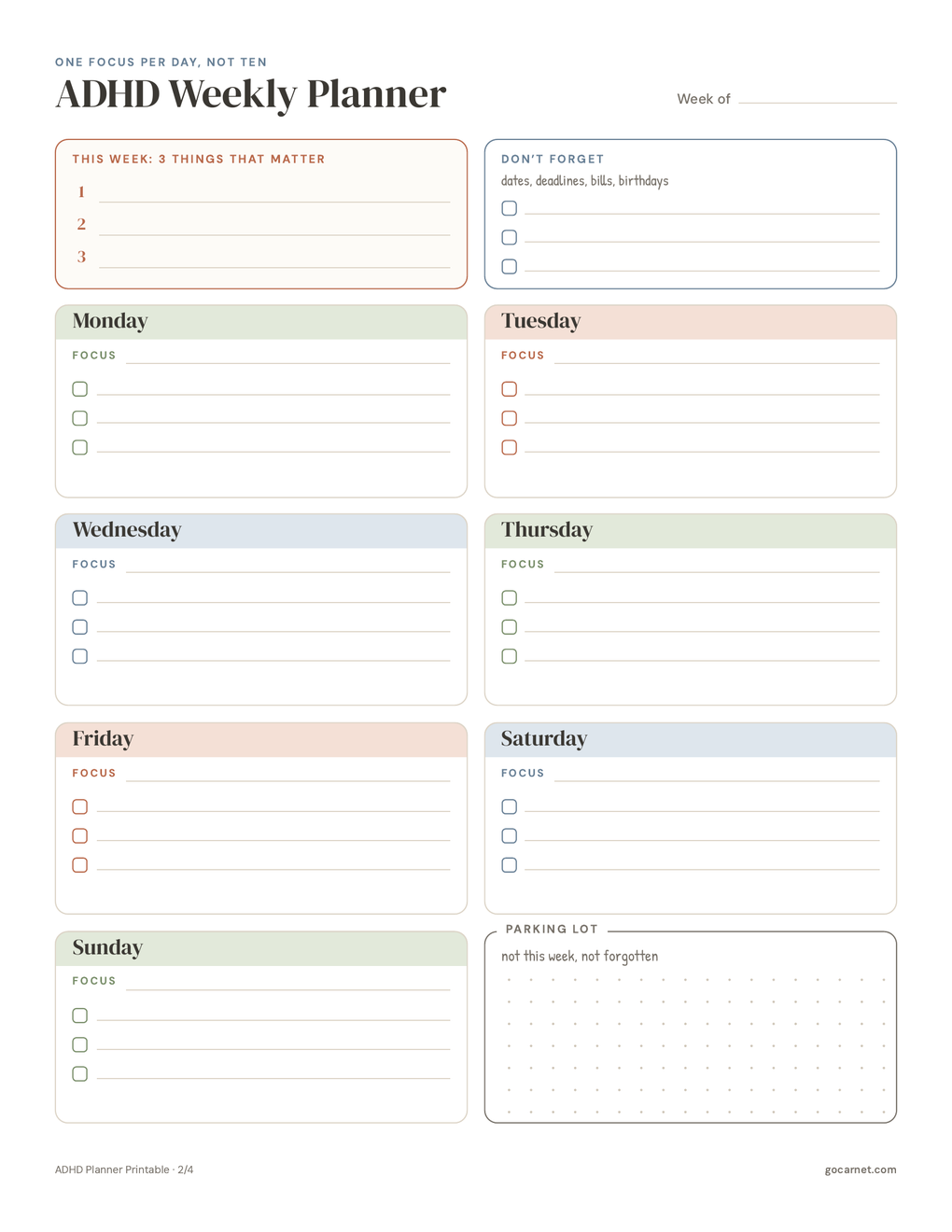
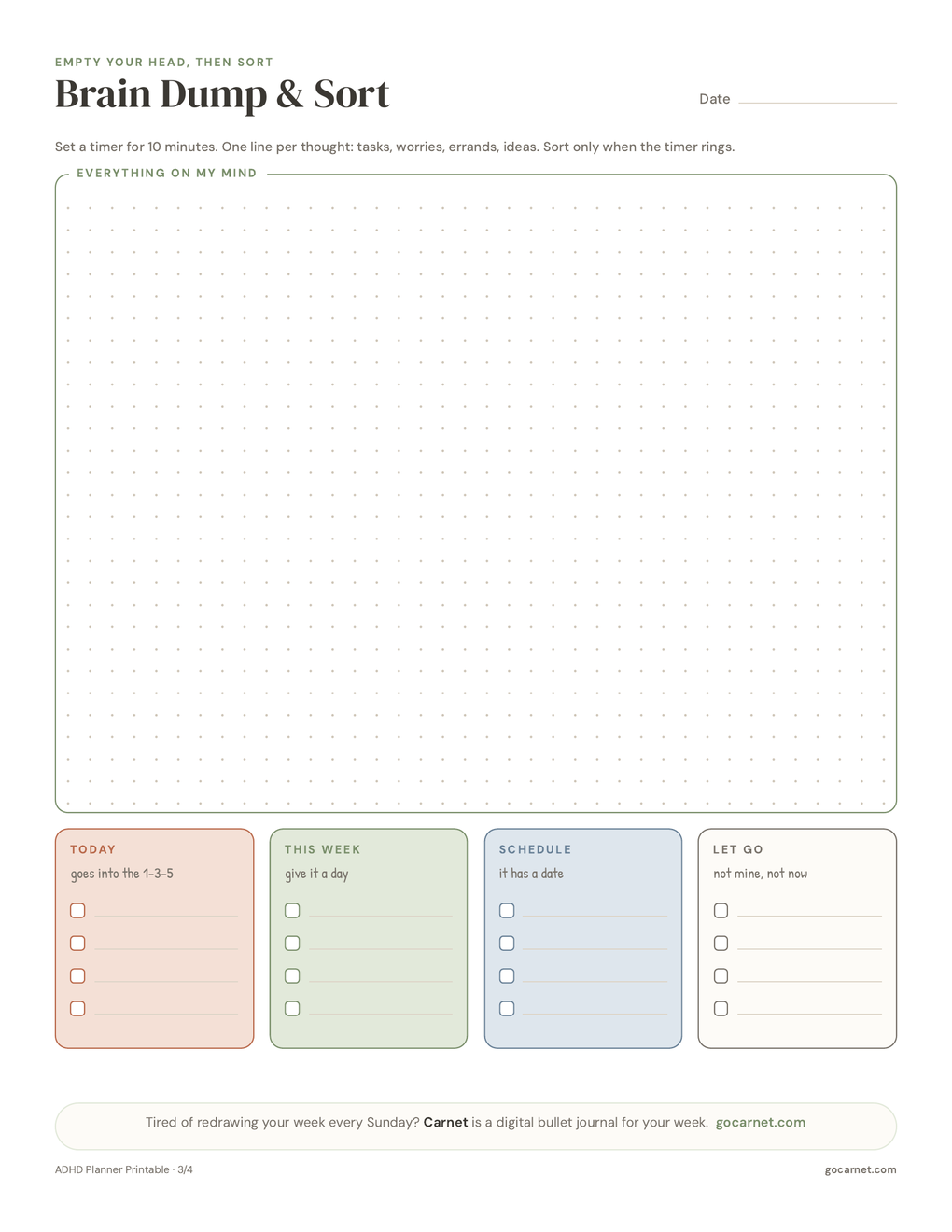
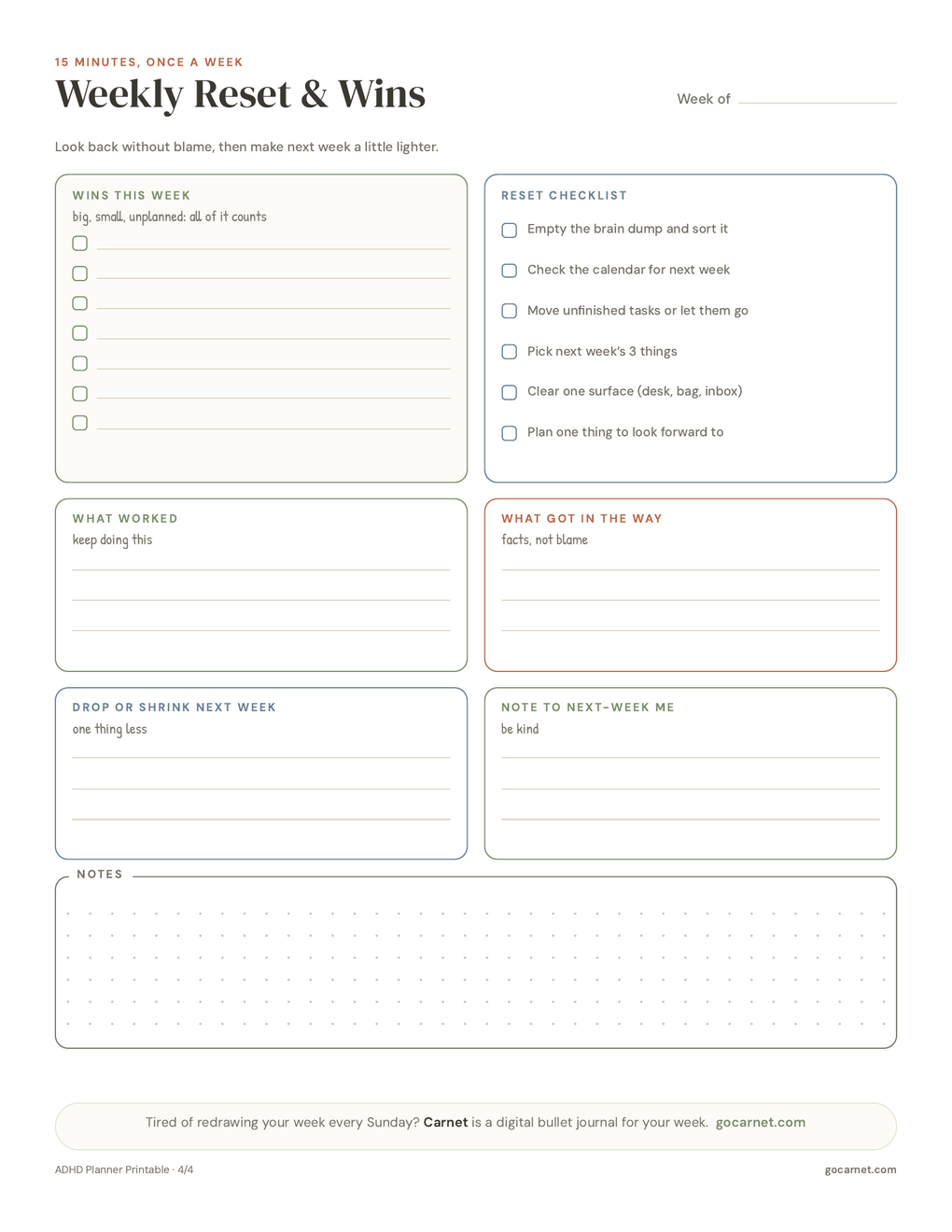
This free ADHD planner printable is a 4-page undated PDF for paper planning: a daily planner built on the 1-3-5 rule with a brain dump and a done list, a weekly planner with one focus per day, a brain dump and sort page, and a weekly reset and wins page. You get both US Letter and A4.
Every page is shown above, so you can check the layout before you print. Enter your email in the form and we send you both PDF files.
This page is about organizing your days on paper. It is not medical advice. If ADHD affects your daily life, talk to a doctor or a qualified professional.
What's inside the ADHD planner template
- Page 1: ADHD daily planner. One big thing, three medium things and five small things (the 1-3-5 rule), then morning, afternoon and evening boxes instead of an hourly grid. On the right: a dotted brain dump, an "if I get stuck" box with three ways to restart, and a done list for everything you finished, planned or not.
- Page 2: ADHD weekly planner. Three things that matter this week, a "don't forget" box for dates, deadlines and bills, then Monday to Sunday with one focus line per day and a few tasks under it. A parking lot holds what isn't for this week.
- Page 3: Brain dump and sort. A big dotted box to empty your head for ten minutes, then four columns to sort it: today, this week, schedule and let go.
- Page 4: Weekly reset and wins. Wins this week, a six-step reset checklist, what worked, what got in the way, what to drop or shrink next week, and a note to next-week you.
All four pages are undated. Print a daily page only on the days you use it, and start the week on any day.
Why this layout
Most planners give you an hourly grid and a long to-do list. That's a lot of empty boxes to feel bad about. This template does a few things differently:
- A short list with a limit. The 1-3-5 rule, popularized by The Muse, caps the day at nine tasks: one big, three medium, five small. On busy days, fill fewer slots.
- Loose time instead of hours. Morning, afternoon and evening are easier to keep than a 30-minute grid. If you need exact times, pair it with the daily planner printable.
- A brain dump on the same page. CHADD's guide to day planners suggests using the planner as a place to write things down so you don't have to hold them in your head. The brain dump box is that place.
- A done list. Crossing things off a short list and writing down what you did anyway shows the day wasn't wasted, even when the plan changed.
- A weekly reset. CHADD recommends a regular planning session and checking the planner every day. Page 4 makes the weekly one a 15-minute checklist.
How to use an ADHD planner printable
- Start with the brain dump. Two to ten minutes, one line per thought. Don't sort while you write.
- Pick your 1-3-5. Choose one big thing, then three medium and five small ones from the brain dump. Leave slots empty if the day is full of appointments.
- Give each one a rough time. Morning, afternoon or evening. Write the first thing you'll do in the morning box so starting is easy.
- When you get stuck, use the box. Shrink the task, set a 10-minute timer, or move it to tomorrow. Moving a task is a decision, not a failure.
- Close the day on the done list. Add what you finished, including the unplanned things.
- Once a week, reset. Sort the leftover brain dumps, pick next week's three things on page 2 and write your wins on page 4.
Keep the planner in one place you see every day, like next to your keys or open on your desk. A planner you don't look at can't help.
ADHD planner ideas
- Plan the night before. Five minutes in the evening and the morning already has its first step.
- Pick the big thing for your best hours. If you focus better in the morning, put it there.
- Use color for "has a deadline". One highlighter for anything with a date, so it stands out on the weekly page.
- Keep a running parking lot. Ideas and someday tasks go in the weekly parking lot, not on today's page.
- Print a week at once. During a Sunday reset, print five daily pages and one weekly page and fill in only the dates.
- Go further on the brain dump. The brain dump template has a by-category page for when you don't know where to start.
For a full method, read how to plan your week with ADHD and our guide to the bullet journal for ADHD.
Paper planning, or a digital bullet journal
If you keep losing the paper or rewriting the same tasks every morning, Carnet is a digital bullet journal for planning your week: every day has its own page, tasks without a day wait in a "This week" box, and your Google Calendar events show up next to them (read-only). It's 100% web, so it runs in your browser with nothing to install. There's no native mobile app, and no habit or mood tracker: it's for tasks and days. You can open a sample week on the Carnet journal page without creating an account. If you keep using it, there's a 7-day free trial (card required), then it's $10 a month. There's no free plan.
More free printables
All free, all in US Letter and A4:
- Daily planner printable: hourly, top 3 and time-blocking pages.
- Weekly planner printable: undated vertical, horizontal and Monday-start weeks.
- To-do list printable: a daily 1-3-5 list, a weekly to-do list and a rapid log page.
- Brain dump template: a worksheet, a by-category page and a journal page.
Or browse every template on our free printables page.
FAQ
Is this ADHD planner printable free?
Yes. The PDF is free for personal use. Enter your email in the form on this page and we send you the US Letter and A4 files. You can unsubscribe from our emails at any time.
What makes a planner "ADHD-friendly"?
There's no official definition. This template keeps lists short (1-3-5), uses loose time blocks instead of an hourly grid, puts a brain dump on the same page and adds a done list and a weekly reset. Those choices follow common organizing advice, like CHADD's guide to day planners. It isn't a treatment and doesn't replace professional support.
What is the 1-3-5 rule?
It's a to-do list format: each day you plan one big task, three medium tasks and five small ones. It was popularized by The Muse. The limit is the point: nine tasks is a full day, and on busy days you plan fewer.
Is the ADHD planner dated?
No. All four pages are undated. Write the date at the top and circle the day of the week, so you can start any day and skip the days you don't use.
What paper size should I print it on?
In the US and Canada, print the US Letter file (8.5 x 11 in). Almost everywhere else, use the A4 file. Choose "actual size" or "100%" in your printer settings so the boxes aren't cropped.
Sources
Checked on November 22, 2026.
- CHADD, Time Management and ADHD: Day Planners (keep one planner, a daily planning session, check it every day, use it to write things down instead of remembering them): https://chadd.org/for-adults/time-management-planner/
- Leicestershire Partnership NHS Trust, Making Sense of Adult ADHD (use a diary, keep one small task list): https://www.leicspart.nhs.uk/wp-content/uploads/2022/12/Making-Sense-of-Adult-ADHD-booklet.pdf
- The Muse, A Better To-Do List: The 1-3-5 Rule (one big, three medium, five small): https://www.themuse.com/advice/a-better-todo-list-the-135-rule
- Carnet, journal page (weekly spread, daily pages, "This week" box, Google Calendar read-only, sample week, 7-day trial, price): https://gocarnet.com/en/journal
More free printables
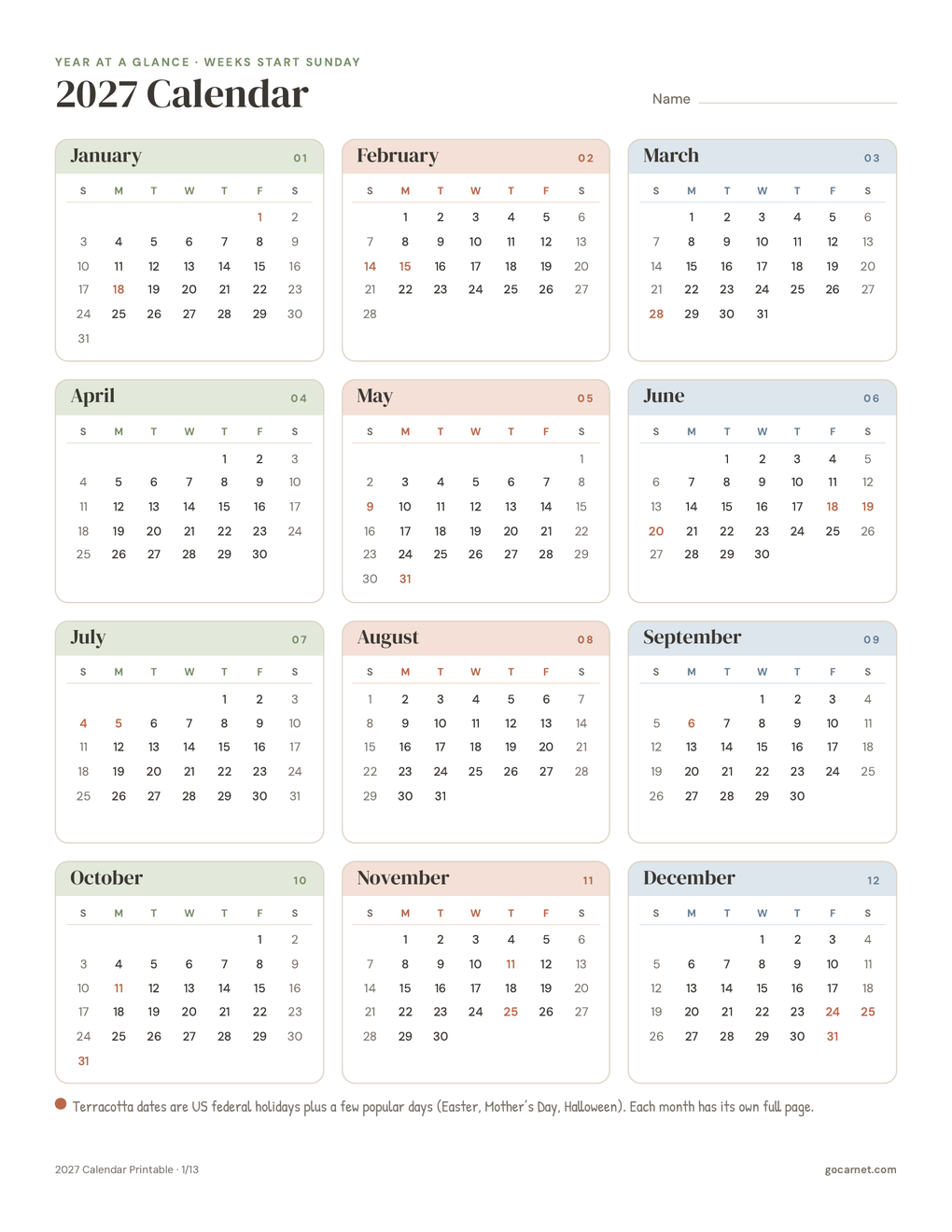 2027 Calendar PrintableA 2027 year-at-a-glance calendar plus 12 monthly calendar pages, January to December 2027, with US holidays marked, a focus box for each month and a dotted notes area. Weeks start Sunday.
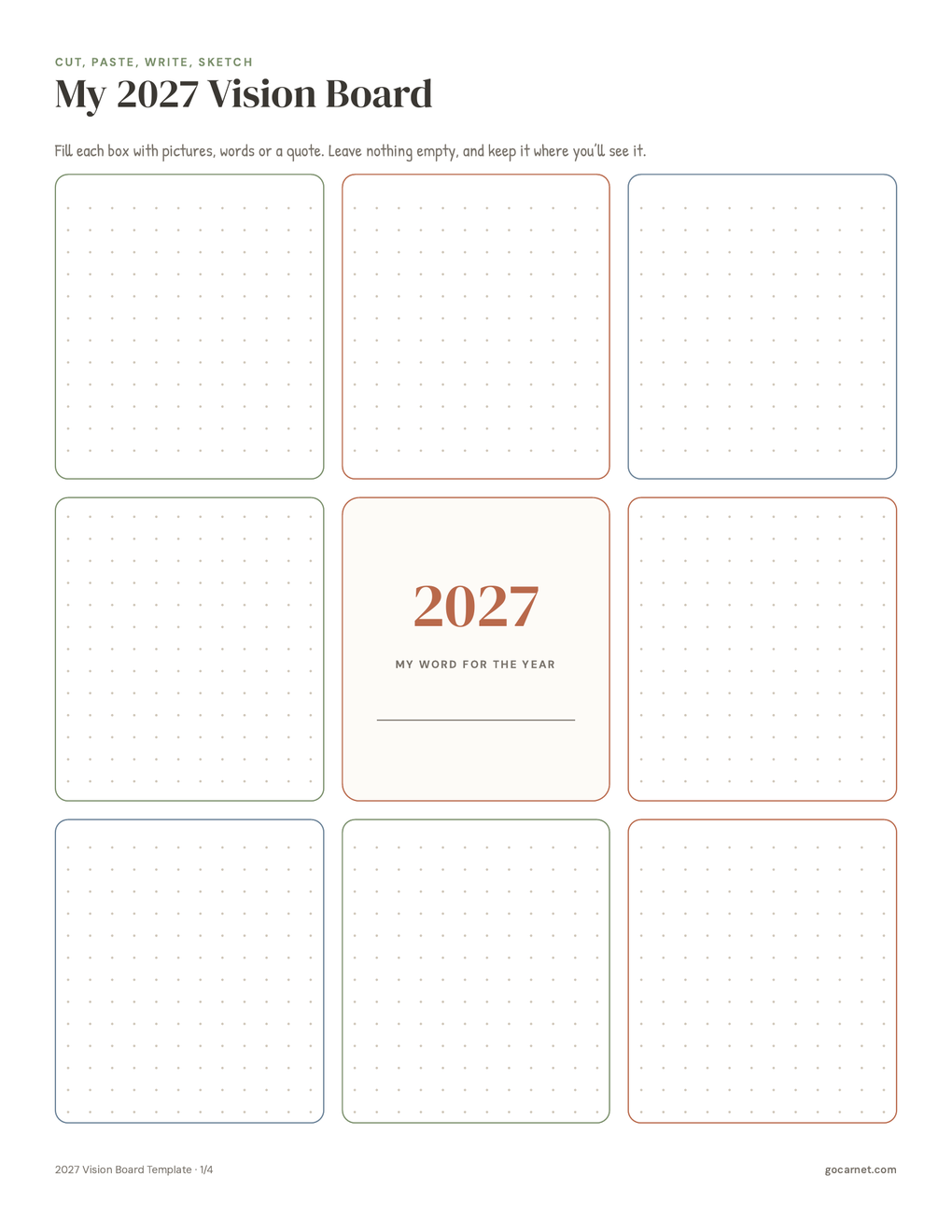 2027 Vision Board TemplateA printable 2027 vision board template: a 3x3 collage grid with your word of the year in the center, a vision board by life area, a word and intentions page and a quarterly check-in.
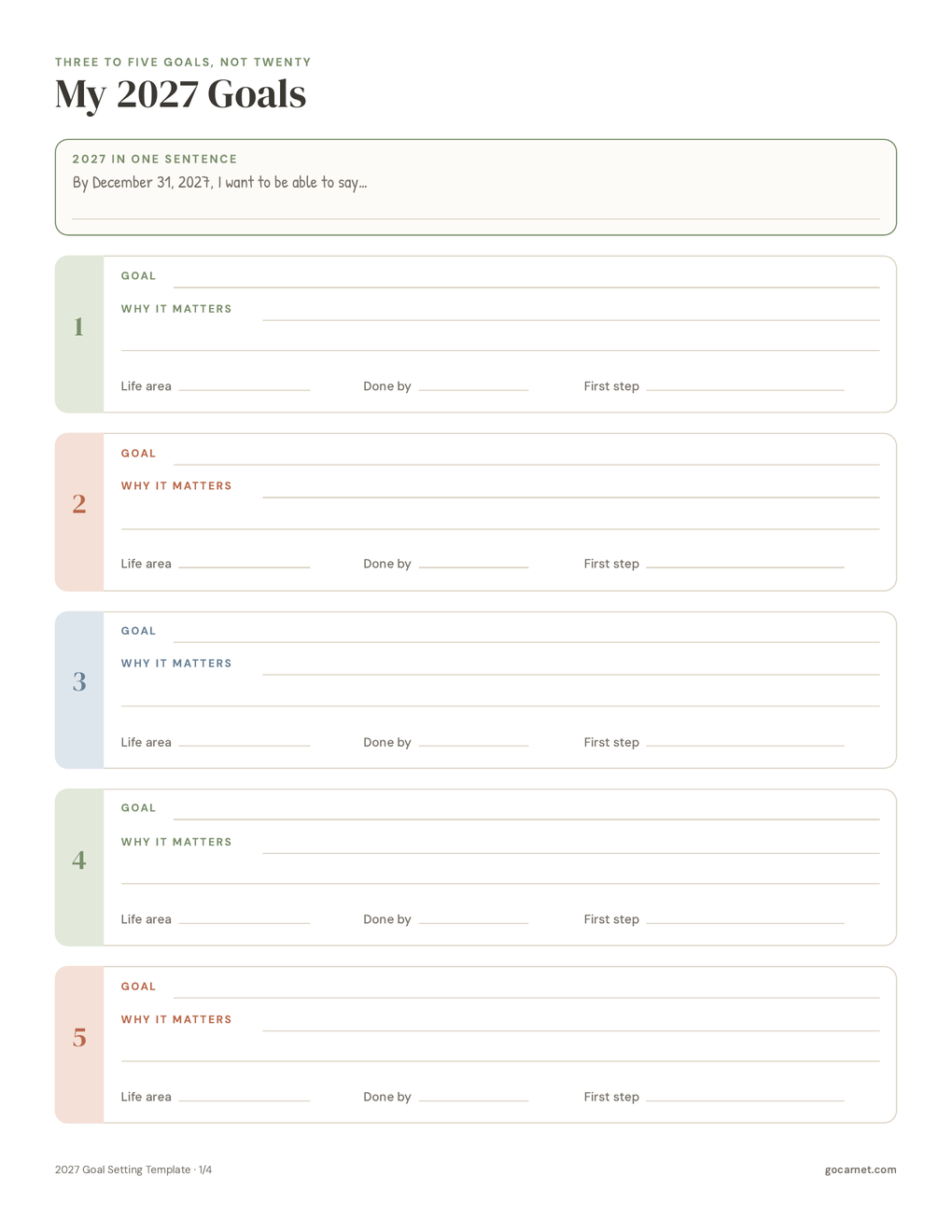 2027 Goal Setting TemplateA printable 2027 goal setting template: five goals for the year, a goal action plan with quarterly milestones, a monthly action plan for 2027 and a new year resolution page.